From Keys in a Bowl to Curated Desire

Words: Madelene Kadziela

(from Issue 03, Vintage)
 

“Oh, your father and I did something similar to that,” my mother said when I told her about the sensual “sex parties” I now host. “We’d go with your godparents to gatherings where everyone was naked.” She paused, smiling faintly. “No sex happened,” she added, as though that might preserve her innocence. I wasn’t sure I believed her, but I accepted the sweetness of the moment, a rare flicker of recognition between generations (even if it was unconventional). 

It was the early 1980s, just off the back of the sexual revolution. A naked party with friends who would later become my godparents felt, in hindsight, like a strange kind of inheritance, and that made me smile.

It also made me wonder: what were they looking for back then? What was everyone looking for? And at a time when feminism was screaming for change, how much did this kind of lifestyle serve women?

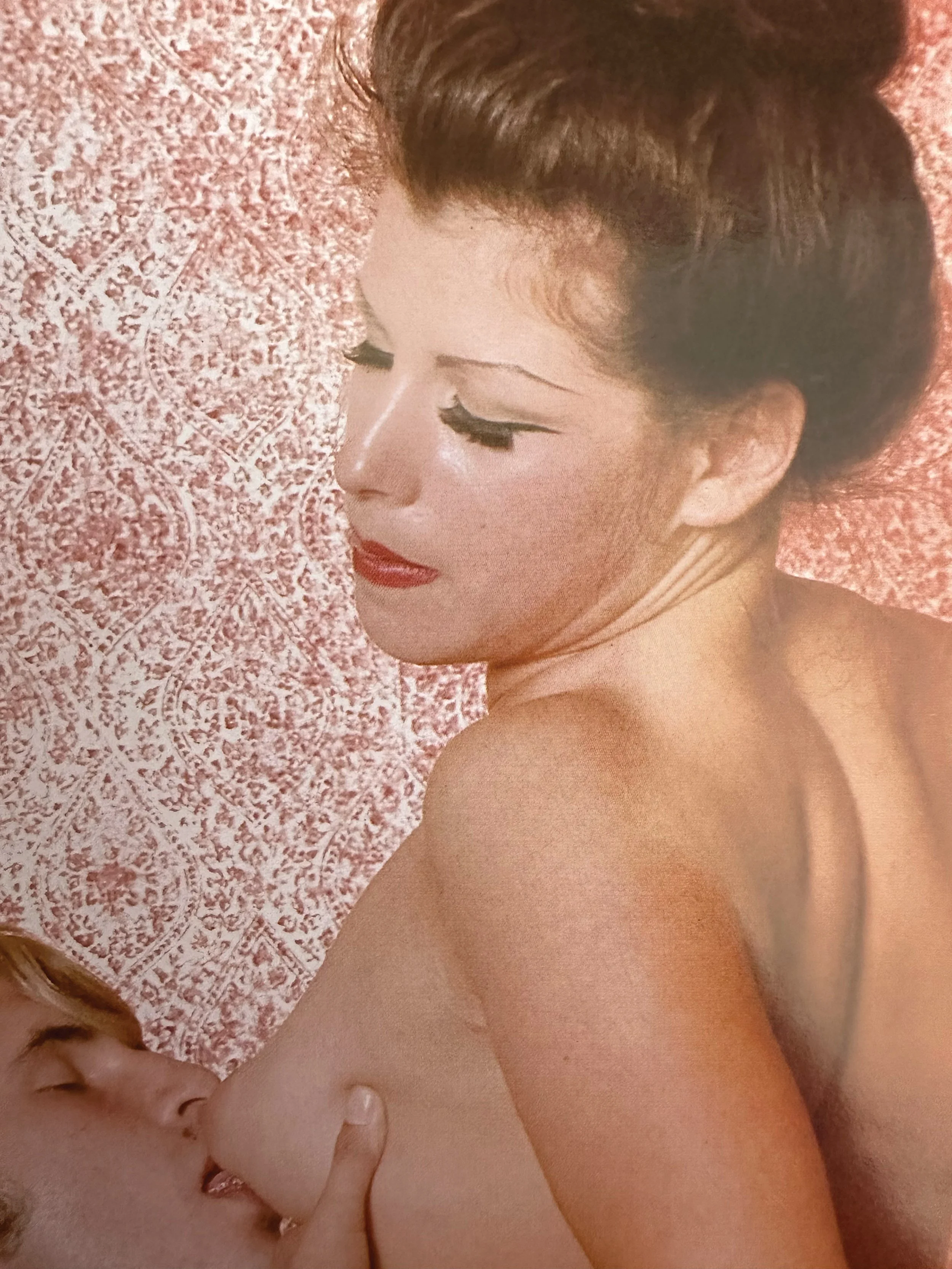
When most people picture a “sex party,” the image is probably suburban and the word swingers comes to mind: cigarette smoke, Fleetwood Mac, a glass bowl for car keys. The kids are asleep, the adults are quietly rebelling.

This was the 1970s, an era caught between post-war conformity and sexual revolution, between the fantasy of freedom and the reality of repression. The nuclear family had been restored after decades of instability, but many people found the structure suffocating. The good life came with good behaviour and behind all that stability, desire was restless.

Swinging culture emerged alongside the arrival of miracle contraception “the pill”, the loosening of religious constraints and a general cultural itch for reinvention. Couples who’d done everything right (marriage, mortgage, kids) began to sense that something was missing. These parties became a sanctioned space to flirt with taboo without technically breaking a vow.

For others, it was about status, the thrill of secrecy, the privilege of inclusion – a kind of suburban avant-garde where boundaries could be stretched within the safety of domesticated community. But even as it promised freedom, the framework remained distinctly heteronormative and male-centric.  Where did women’s pleasure actually sit in all this? To surrender your body to the luck of a key being drawn from a bowl feels less like liberation and more like a social experiment conducted under the guise of sexual revolution, perhaps only re-entrenching patriarchal power. 
By the 1980s and ’90s, the scene had left the lounge room and found the nightclub. Desire became louder, darker, more performative. Cities like Paris, Berlin, London and New York became laboratories for new forms of pleasure. The erotic was no longer hidden, it was staged. Warehouse raves, fetish nights, underground art parties – spaces where the line between sex, performance and protest dissolved entirely.

The reasons were as cultural as they were chemical. The decade of excess came with new intoxicants; cocaine in the ’80s, MDMA in the ’90s. Substances that promised connection but often delivered disassociation. Club drugs blurred boundaries, softened fear and heightened sensation. People weren’t just chasing orgasm; they were chasing oblivion.

It was also a time when traditional institutions (church, marriage, government) were losing their moral authority. The club became the new cathedral. Bodies became the last frontier for freedom.

In this cultural fever dream, figures like French art critic Catherine Millet emerged, documenting the erotic underground with unnerving clarity. Her 2001 memoir The Sexual Life of Catherine M. reads like both confession and ethnography, a record of Paris’s libertine scene where hundreds of bodies converged in fields, car parks and converted warehouses.

“I never wanted to possess the bodies I desired,” Millet wrote. “I wanted to pass through them – to be absorbed, to disappear.”

Her writing was deliberately clinical. “I observed the bodies the way I might look at a painting,” she wrote. “Composition, movement, texture.”

There was no romance, no moralising, only observation. Sex was sculpture. Pleasure, performance.  Reading her now – with the privilege of being less polarised by her writing and more curious of the time – was this approach just another form of escape? What happens when desire is stripped of narrative, when the erotic becomes a stage set and we become the props?

Millet’s world mirrors that of Berlin’s KitKatClub, London’s Torture Garden, and New York’s post-Studio 54 scene. It was an era where fetish collided with fashion, techno with tantra and intoxication with identity. The allure was in the chaos, the sense of being unmade. Drugs and alcohol dissolved inhibition and the music – that relentless, pulsing bass – suspended time. You could forget who you were, where you worked, who you were supposed to love. The erotic wasn’t personal, it was collective.

Somewhere in the blur of bass and bodies, tenderness slipped quietly out the back door. It’s fair to say that, when pleasure became performance, intimacy was the price of admission.


“ The modern sensual movement isn’t about excess; it’s about intention. It’s not the Eyes Wide Shut fantasy of faceless indulgence, but an eyes-open invitation to self-discovery.”
 

In the early 2010s, dating apps like Tinder, Bumble and Feeld became the new marketplaces of intimacy. We gained endless choice, but with it, a strange kind of emptiness. Don’t get me wrong, I found love with my now partner of four years, but only after a decade of swipe, match, ghost, repeat. By the end, I had almost given up hope, as so many have today.

As a culture, we became consumers of one another, seduced by variety. Sexual liberation, at least in its digital form, began to resemble capitalism: abundance without intimacy.

Then came the #MeToo movement – a cultural reckoning that ripped the veil off power and consent. It forced us to confront the question that early sexual liberation movements had largely ignored: liberation for whom? Women began speaking out, taking up space and reclaiming sexual agency not as rebellion, but as birthright. At the same time, taboo culture was dissolving. Conversations about sex, kink and gender were happening on public stages, in classrooms and on screens. The private had become political. Pleasure, once whispered, was now part of mainstream discourse.

Culture had spent the last half-century trialling the boundaries of freedom; politically, sexually, spiritually. Pleasure had entered the conversation. We’d tested every model of desire: open marriages, polyamory, ethical non-monogamy, OnlyFans, sugar babies, even the return to monogamy and “trad wives.”

And then, of course, the world stopped. COVID didn’t just isolate us, it disembodied us. After years of touch deprivation and digital intimacy, it’s no wonder we now crave something slower, more tactile, more real. The pendulum has swung back toward presence. We are no longer chasing more choice, but more connection. To be seen, to be held, to be known beyond a screen.

If anything, the rise of modern sex parties tells us everything about our culture. They are mirrors, reflecting our collective hunger for authenticity after decades of excess. Where the ’70s were about experimentation and the ’90s about spectacle, today is about integration: body, mind, ethics and community.

When the world reopened, I too felt that pull toward something raw and unashamed. But most “sex-positive” spaces still mirrored old dynamics – male-dominated, performative, transactional. That’s what I wanted to change.

Post-COVID, a new wave of erotic culture began to form, one driven largely by women. For me, I wanted spaces that felt safe, inclusive, sensual and intelligent. Rooms where consent wasn’t a side note but the structure. Where every guest, every body, every orientation could exist without fear or expectation.

Nocturnal, a curated modern intimacy experience, was born from the refusal to choose, between intellect, connection and the erotic. I wanted all three, wrapped in design that didn’t just look good but felt good. The cerebral, the erotic, the connected – held together by the sensuality of space itself. 

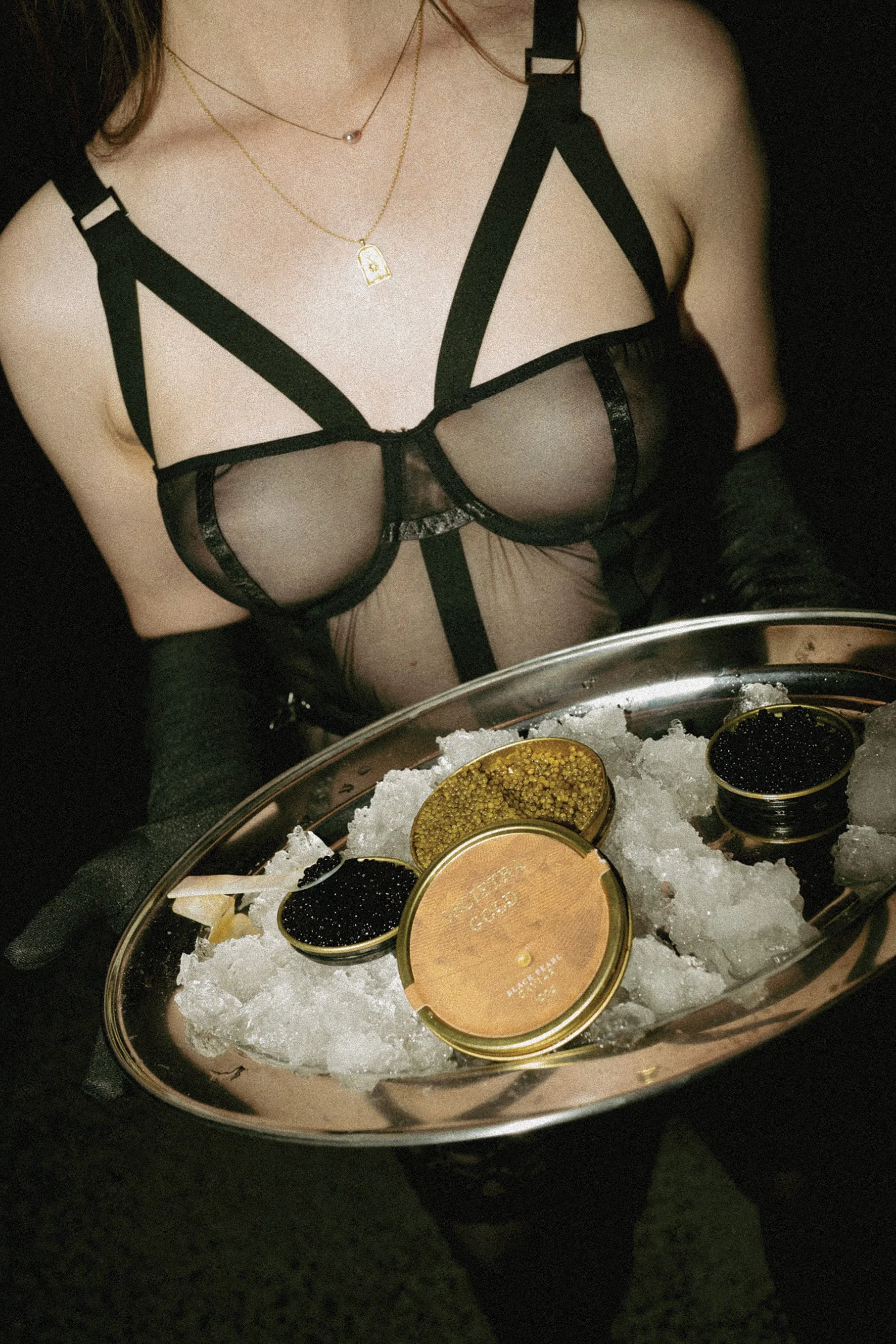
Today, Nocturnal exists as a members-only erotic events collective. A space for unashamed exploration, connection and sensuality, hosting a range of experiences: Cinema Erotica film nights, social soirées, workshops with leading professionals in Tantra, sexual health and shibari, as well as intimate dinners with sexologists and our Nude Dinners. Finally, our Sensual Play Parties: a modern interpretation of the sex party. Sensory-rich nights set in architecturally designed homes and spaces, where black-tie meets champagne, caviar and performance (think burlesque, rope or the commanding presence of a dominatrix). At Nocturnal, connection always comes first. Sex is secondary, a by-product of trust, conversation and the kind of intimacy that can only form when curiosity is met with care.

Too often, people assume that a room full of people exploring sex must also be a room devoid of care, that aesthetics don’t matter, that design is decoration. But that couldn’t be further from the truth. As designer Ilse Crawford once said, “Design is not about a thing, it’s about a feeling.” The same could be said of erotic spaces: when design meets desire, the body responds. The space itself becomes foreplay.

And while sex might be the initial invitation, community is what keeps people coming back. At Nocturnal, guests often tell me some of their favourite experiences are not the moments of play, but the conversations before and after, the dinners, the workshops, the social gatherings where intimacy unfolds in quieter forms.

In one of my Substack essays, a reader once commented that sexologists at a sex party “aren’t sexy,” that all this education and awareness makes desire too clinical. But here’s the irony: that’s where a new form of eroticism lives –  in consciousness, in clarity, in self-knowledge. The turn-on now isn’t recklessness, it’s awareness.

One woman said to me recently, “I was shocked (in a positive way) to see entire rooms of women being pleasured. That’s not what I expected from a sex party.” That, to me, captures the shift. For so long, the erotic was orchestrated around male satisfaction. Now, the focus has turned toward feminine pleasure, inclusivity and the art of care.

The modern sensual movement isn’t about excess; it’s about intention. It’s not the Eyes Wide Shut fantasy of faceless indulgence, but an eyes-open invitation to self-discovery. To explore your own desires consciously, deliberately, without shame. And maybe that’s the quiet revelation of all this – that after fifty years of experimenting with freedom, what we really wanted wasn’t to be free from others, but to feel free with them.


Previous
Previous

Contemporary Hedonism: Reclaiming Pleasure on Our Own Terms

Next
Next

Pitch, Please: [CLOSED] Moi #04 – THE FUTURISTS