Riot Grrrls, Rage & the ‘90s: How music changed feminism

Kathleen Hanna the singer of Bikini Kill playing at the Legendary TJs in Newport, Wales, UK on 8 March 1993. This Bikini Kill/Huggy Bear Tour came at the peak of the Riot Grrrl scene and was to promote the two bands combined 1993 album Yeah Yeah Yeah Yeah (Kill Rock Stars). The gig started with a music workshop for women only. Photo: Rob Watkins.
Words: Lila Theodoros
It’s 1993. You’re a woman at a punk show. The stage sits at the end of a crowded, smoke-hazed room, floor sticky, bodies moving towards a crush, sweat now more a collective than individual experience.
A wall of men holding (spilling) drinks blocks your view. Attempts to move through this crowd typically involve invisible rough hands groping your body – usually your breasts, often your ass or your pussy. You just came to see the band and, like usual, have had to prepare for this battle: outfit as considered as possible [a dress is great but easier access for these perves; jeans are safer but why should you have to fucking compromise your taste??!?]; and ready to block the physical assault as casually as you can to ‘not make a big deal’. You just want to see the band. Then you hear it …
“Girls to the front!”
The rallying cry of Bikini Kill’s lead singer, Kathleen Hanna, at shows in the early ‘90s was more than an invitation to get closer to the stage – it was a demand for space where women could actively participate in this new era of music without being dismissed, sexualised or assaulted.
In her book, Rebel Girl, Hanna explains, “I decided I was gonna do everything in my power to make Bikini Kill shows a brief reprieve from sexism, even if it was imperfect and fleeting.”
For context, huge societal shifts were building in the early nineties – genres like grunge were emerging and provided a sharp left turn from the sex-fuelled excess of ‘80s glam rock. Full of emotional despondence, anger and rebellion, grunge guided/smashed in a culture shift. The gates were open for experimentation and indie rock and punk bands were changing the tone of music and culture. But, despite earlier feminist progress, fought for in the ‘70s and ‘80s, the music scene was still male dominated and shows were violent and unwelcoming for anyone without a dick. But change was coming and ready to take up space.
Women-led bands like Bikini Kill, Bratmobile, Huggy Bear and Sleater-Kinney were changing the face of music, feminism, art and activism. Inspired by the early influence of female punk pioneers such as Poly Styrene, Joan Jett, Patti Smith and Siouxsie Sioux, it was time for “Girls to the front!”
What started as an act of safety and reprieve at a feminist punk show, grew in momentum to become the undercurrent that fuelled the Riot Grrrl movement.
Kim France, a journalist and early documentarian of the Riot Grrrl in the ‘90s, said, “Riot grrrls’ unifying principle is that being female is inherently confusing and contradictory and that women have to find a way to be sexy, angry and powerful at the same time.”
The Riot Grrrl movement grew organically – from women in male-dominated spaces discussing sexism in the punk scene and offering counselling around safety, such as Kathleen Hanna of Bikini Kill (Hanna along with Jenny Toomey are credited with holding the very first Riot Grrrl meeting); to women-led punk bands using their lyrics to call out violence and misogyny; to art-led vehicles like zines and exhibitions where women could freely express themselves. This culmination of voices grew into a movement of activism and change.
Riot Grrrls’ was a call for women to express their anger – it birthed music, art, zines, meet ups, political activism and community. Using their creativity, Riot grrrls’ raged about domestic violence, misogyny, racism, rape, anarchy and the patriarchy, empowering women to join in and use their voice for change.
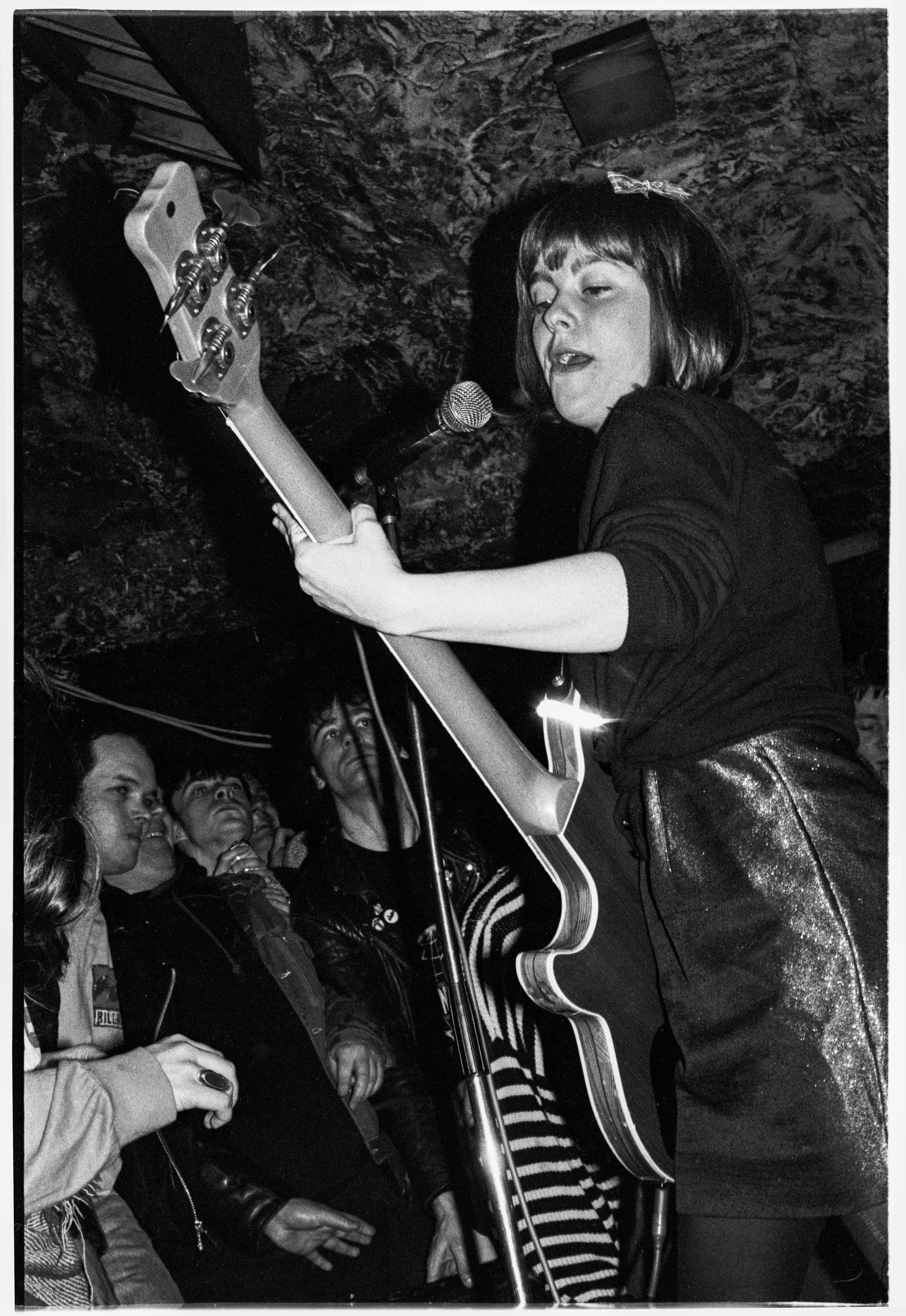
Niki Eliot the singer of Huggy Bear playing at TJs in Newport, Wales, UK on 8 March 1993. Photo: Rob Watkins.
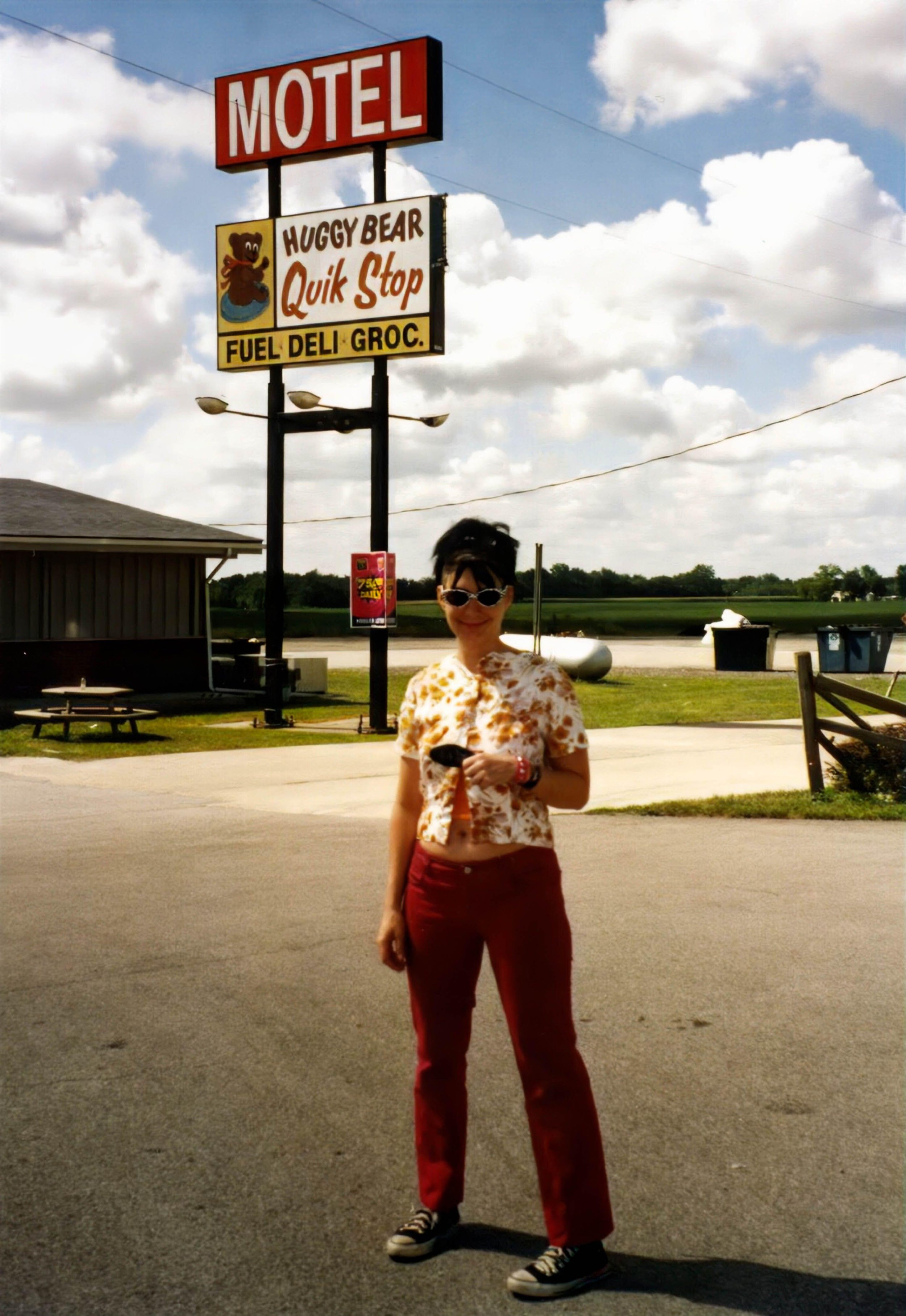
Kathleen Hanna, lead singer of Bikini Kill.